Saturday, July 24, 2010

Imitation Is Pure Flattery


In the previous post I mentioned the kinds of ancient portraiture I use in my artistic reconstructions of the faces of the royal mummies. Now I am taking the opportunity to discuss one of them, perhaps the most fortuitous. For some reason it was the custom for the nobles and officials of Egypt to have themselves portrayed with the face of the current monarch--and their wives as well. The down side of this convention is that we have missed knowing what these ladies and gentlemen looked like, themselves. On the other hand, it would happen that the artisans who created these portraits often did not trouble to flatter [or perhaps idealize] the pharaoh as much as they did when executing his own likenesses. Therefore the statues, etc., of the nobles provide very helpful insight into how these kings really appeared. Also, it is often possible to date this art to a certain reign just by studying the features.


Those of us who have studied the faces of the pharaohs at length recognize them when we see them--even spot modern ringers for these defunct Egyptian kings. As you can see the face of Seti I, below, you might be interested in a dyad that I have assigned to his reign. Both husband and wife, while looking a bit different, serve to highlight various aspects of the king's face--his large eyes, flaring nostrils, full lips and rather full cheeks. Compare their faces to that of their master.

Sunday, July 11, 2010

Forensic Method Reconstructions--Hate Them


It's a fad that has been going on for some time now--creating skulls from radiological images of Egyptian mummies, royal or common, and then making so-called "portraits" of these defunct people using the forensic method. This method has certain guidelines for how much "flesh" [be that clay or just while doing a virtual image] goes onto certain parts of the skull. It was always meant to be a "better than nothing" approximation of the appearance of a dead individual in hopes someone might be able to identify him or her from it. And the result always looks pretty lifeless, too, and only marginally accurate. From the forensic method, there is no way to know what the shape of the nose was [except perhaps how high the bridge] or that of the lips or eyes.

One needs only see the results some reconstructors got using the method from a manufactured skull of Tutankhamun without being told who the subject was. None of them looked alike and none resembled ancient portraits of the pharaoh.


I maintain that, without using ancient portraits for guidelines, these reconstructions are simply useless and to pass them off as how the person once looked a travesty. I have done artistic reconstructions of mummies utilizing large photos of the heads and tracing over them in order to obtain the correct dimensions. One of the best ones I have done is of King Seti I. But I also used likenesses of him executed by the artists of his reign. They were crucial in obtaining a pretty accurate and life-like portrait. Judge for yourself and compare my method to the forensic one. The perspective or angle of the face is the same as the photograph of the head of Seti I in the book, "The Royal Mummies" by Prof. Elliot Smith. Obviously, the photographer was crouched down and so the chin is closest to the camera. I didn't bother with royal headgear as the face is magnificent by itself. The head of the mummy is shaved.

Thursday, July 8, 2010

A Beauty of the Cairo Egyptian Museum

Ay


Click on images to enlarge them.

At left is one of the most wonderfully executed pieces of sculpture in the Cairo Egyptian Museum. What you see is the wife of Nakhtmin, part of a dyad with her husband, at right. The work was created during the reign of the pharaoh, Ay, and, as was the fashion, the faces of Nakhtmin and his spouse were carved as beautified versions of the features of Ay, himself. That is why, facially, Nakhtmin and the lady appear very much alike, although the face of the female is considerably destroyed. However, placing a sheet of transparent paper over a larger image of the ruined face, I was able to restore it to its former dimensions. The nose is nearly wholly missing, but I was able to realize how it had appeared from the general shape of the one of Nakhtmin. Had it been found intact, this dyad would have been one of the most breath-taking artistic masterpieces in the museum. Actually, it still is.

Saturday, June 19, 2010

Another Wife For King Tut?

The scene at left is from the tomb of Amenhotep [also called Huy] and depicts Nubians bringing tribute to Tutankhamun. This section of the longer scene shows a lady accompanied by some men and the caption next to them reads " children of the chiefs of all countries" [of the southern regions]. These are, unlike the other foreigners in the painting, dressed in Egyptian-style costume and jewelry. Note, however, that a new style seems to be involved as the people from the south have straps on the heels of their white sandals and beads descend from their upper armlets. The lady appears to be wearing a golden diadem, which perhaps has golden elements hanging from it that cover her hair. Either that, or she is wearing a blonde wig or has had her own hair bleached by some method. Perhaps this woman and her companions are part of the tribute, a suit for peace that includes much gold and the children of some chieftain--especially the young woman, as females were not emissaries, normally. It would not be far fetched to conclude that the lady is intended as a wife of the pharaoh, Tutankhamun, and there is no other conceivable reason for her presence.
The status of the female is further indicated by the fact that she stands alone, here and in her ox-drawn chariot farther back in the scene, while her compatriots are shown in groups.


Tutankhamun, as we know, already had a wife named Ankhesenamun, his close relative, but the kings of Egypt were not monogamous as a rule. If this Kushite girl was given to Tut in a political marriage, she would have been secondary to the Great Wife, Ankhesenamun, however. That we do not see this girl depicted with Tutankhamun in a wifely role would not have been unusual, either. In the 18th Dynasty, lesser wives were not depicted with their royal husbands.

Friday, June 18, 2010

Thutmose IV

Talk about your "wayback machine", there is ReoCities, who were nice enough to save some of my articles, including this one about Thutmose IV, which addresses his age upon accession:

http://www.reocities.com/scribelist/artthut4.htm

I think you'll like my rendering of a dyad in the Louvre, which shows the husband of the couple with the features of Thutmose IV:

Tuesday, June 15, 2010

Coincidences? Beware--weird stuff!


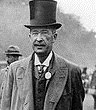
About the curse of King Tut...well...I am not a believer in curses but I have to admit there are some strange coincidences there. For one thing, has anybody ever noticed how much Lord Carnarvon resembles Ay, the man who succeeded Tutankhamun as pharaoh? I don't have a good photo of the plaster mask from Amarna that is surely Ay but everybody knows what it looks like. Compare it to this photo of the Earl. Same little narrow eyes, long thin face and nose. Many members of the Amarna family had large heads and someone once wrote that Lord Carnarvon had such an elongated skull that he had to have his hats specially made.

Some believe that Amenhotep III, Tut's grandfather, married a woman of Semitic ancestry and, judging by the face of the mummy of Queen Tiye's father, Yuya, there's a good possibility that's so. Lord Carnarvon's wife, Lady Almina, was the illegitimate daughter of Lord Alfred Rothschild. The wealthy Earl of Carnarvon died in Egypt of systemic poisoning caused by an infected mosquito bite on his face. It is now known that Tutankhamun's death was probably hastened by a mosquito, too--one that gave him malaria. At the time of Carnarvon's death, his dog back at his home, Highclere Castle, supposedly keeled over and died, as well. Hmmm...looks like Anubis decided to finish off the man's best friend while he was at it :-( Or maybe Tut's ghost took one look at Lord Carnarvon and thought it was the return of Ay, the man who had the nerve to have himself portrayed as pharaoh in the young king's own tomb, a liberty never before taken. In fact, the tomb was a cramped, shoddy affair, totally unfit for a royal spectre. Others have written of strange coincidences surrounding the discovery of KV62. Thought I'd just add to the nonsense...er...mystique.

Friday, May 21, 2010

Mandatory Celibacy

Having now written two books about Catholic priests, one fiction and one historical, I have given some thought to mandatory celibacy, of course. Even though I think the imposition does far more harm than good, I would not normally write about it on this blog but I recently read an article by James Carroll that is arguably the most excellent piece on the topic I have yet seen.

http://www.boston.com/bostonglobe/editorial_opinion/oped/articles/2010/05/16/celibacy_and_the_catholic_priest/

It is well worth a look for those who are trying to wrap their minds around what is happening with the Roman Catholic clergy and its recently publicized abuse scandals.